

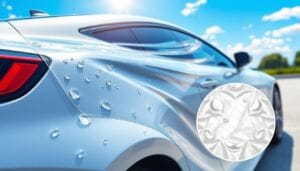
PPF stops rocks from chipping your paint. That is the headline. Everything else PPF does is a bonus on top of that core job.
We install paint protection film at our Wylie shop, mostly on front bumpers, hoods, and fenders for daily drivers, and occasionally as full vehicle coverage on higher-end cars. Owners often have a fuzzy idea of what PPF actually does, so this is a clean walkthrough.
Table of Contents
ToggleWhat PPF is, physically
PPF is a clear urethane film. Thick, flexible, and engineered to take impact without transferring it to the paint underneath. Modern PPFs include a self-healing topcoat that closes light scratches when warmed.
The film goes on as a single piece per panel, custom cut to the contours of the vehicle. We use XPEL Stealth and XPEL Ultimate Plus most often, depending on whether you want a satin finish or full gloss. Both films come with manufacturer warranties against yellowing, bubbling, and cracking.
When installed properly, PPF is nearly invisible. From a normal viewing distance you do not see the film. Up close, on careful inspection, you can find the edges where the film stops.
Job one: chip protection
The core function. Rocks come off the road, hit your front end at highway speed, and chip the paint. PPF absorbs that impact.
Without PPF, every rock that hits your bumper or hood at 60 mph leaves a chip. Multiply by a year of commuting on a Texas highway and you have dozens. PPF stops them. The rock hits the film, the film flexes, the paint underneath stays untouched.
This is why front kits are the most popular install. The bumper, hood leading edge, fenders, and mirrors take the bulk of the impact. Cover those panels and you stop most of the chip damage that ruins paint over time.
Job two: bug splatter and bird droppings
Texas highways have a lot of bugs in summer. Bug guts are acidic, and they eat into clear coat over a few hours of heat. The same goes for bird droppings, which are worse because the acid concentration is higher.
PPF takes the chemical hit. The topcoat resists the acid the same way it resists impact. Wipe the bug splatter or the dropping off the next time you wash and the paint underneath is fine.
Without PPF, bug guts left on a hot bumper for a day can leave a permanent stain. Bird droppings left in the sun can etch the clear coat. PPF prevents both.
Job three: UV protection
Texas sun fades paint over years. The clear coat oxidises, the colour underneath dulls, and you end up with a matte, hazy finish that nothing short of polishing or repainting can fully restore.
PPF blocks UV before it reaches the paint. The paint under PPF stays as fresh as the day the film went on. When the film comes off years later, the paint underneath looks newer than the surrounding panels that were exposed.
This benefit compounds over time. The longer the PPF is on, the bigger the difference between protected paint and exposed paint.
Job four: self-healing surface
Modern PPF has a topcoat that flows back into shape when warmed. Light swirl marks, fingernail scratches, and minor wash marring close themselves when the panel sits in sun or after a hot rinse.
This means the film looks fresh longer than bare paint would. Daily drivers pick up small wash scratches over time even with the best wash habits. PPF self-healing erases those.
What self-healing does not fix:
If you can feel the scratch with your fingernail, it is too deep to self-heal. Surface scratches that you can see but not feel disappear in the next sunny day.
What PPF does not do
A few things owners assume PPF does that it does not.
PPF does not change the look of your car. The film is clear. The factory paint shows through. The exception is XPEL Stealth, which adds a satin finish overlaid on glossy paint, but this is a finish change, not a colour change.
PPF does not stop hail. Hail dents through PPF and through paint. PPF can absorb very light hail dings on flat panels better than bare paint, but a real hail storm dents both.
PPF does not stop intentional damage. A keyed car with PPF still has a damaged panel, just one that is harder to scratch through. Determined damage gets through.
PPF does not last forever. Quality films last 10 years or more. Cheap films last 3 to 5 years and start to yellow. The film is a long-term protection layer, not a permanent layer.
Where PPF goes on the car
Coverage options scale with budget and use case.
A front kit covers the impact panels. Bumper, hood (full or leading edge), fenders, headlights, mirrors. Stops 90 percent of the chip damage you would otherwise see.
A track or high-impact package adds rocker panels, A-pillars, door cups, and sometimes the leading edge of the roof. The right call for sports cars or anyone driving twisty roads.
Full PPF covers every painted panel on the car. Best for high-value vehicles, high-end paint, long ownership periods, or any combination of those.
Single panel installs make sense for replacement of damaged film, or for adding coverage to a specific area you want protected.
We can scope any combination. Send us photos of your car and how you drive, and we will recommend the coverage that actually fits.
What PPF costs
Pricing depends on coverage and vehicle. Ranges at our shop:
Every quote depends on the vehicle, the panel count, the film, and the condition of the paint underneath.
Maintenance and life expectancy
PPF needs the same wash routine as paint. Hand wash with pH-neutral car shampoo, two-bucket method, dry with microfibre. Avoid brush washes. Knock bug splatter and bird droppings off the same day. Decontaminate twice a year.
Quality PPF lasts 10 years or more in DFW with proper care. Garage-kept cars hold film longer than outdoor cars. Daily commuters might see 8 to 10 years before the film shows its age. Garage queens can run a film 12 years or more.
When the film reaches end of life, we remove and reinstall. The paint underneath, protected the whole time, comes out the other side fresh.
Is PPF worth it for your car
Three honest tests.
Is the paint expensive to repair? High-end paints (matte, special metallics, candy paints) cost more to match and respray. PPF earns back its cost faster on cars where a chip means a $1,500 panel respray instead of a $200 touch-up.
Do you keep cars long term? PPF lasts 10+ years. The longer you keep the car, the lower the annual cost of the protection.
Do you commute on highways or take road trips? Highway miles equal rock chips. Garage queens that mostly sit do not need much PPF beyond the front kit (or any at all if the exposure is low enough).
If your answers point to yes on most of those, PPF is worth it. If you flip cars every two years and you mostly drive in town, the front kit alone is enough or you can skip PPF entirely.
How PPF compares to ceramic coating
Different jobs.
PPF is impact protection. Stops rocks, takes the chemical hit from bugs and droppings, self-heals minor scratches.
Ceramic coating is chemical and water protection. Makes water bead, makes the car easier to clean, adds gloss, helps resist UV. Does nothing for impact.
The two products work together. Many of our installs include PPF on the front and ceramic coating across the rest of the vehicle. PPF where you need impact protection, ceramic where you need cleaning and gloss.
Climate notes for DFW
Texas heat puts stress on PPF adhesive. Quality install with proper post-heat handles it. Cheap install in a hot bay with no climate control fails fast.
UV is hard on the topcoat over years. The high-grade XPEL films stand up to it. Cheap film yellows.
Hail season we have already covered. Park inside if you can.
We service Wylie, Plano, Frisco, Allen, Garland, Rockwall, Murphy, Sachse, and Lavon. PPF is one of the few car investments that pays back over the life of the vehicle. If your car is worth keeping, the front kit is worth the spend.
*This article was drafted with the help of AI and reviewed by the Shell Shocked Wraps team.*
