

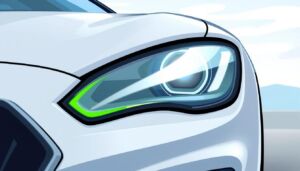
PPF on headlights is a clear urethane film applied over the lens, the same material we install on the front bumper and hood. It protects the lens from rock chips, road debris, sand abrasion, and UV damage that yellows the plastic over time. Of all the small PPF add-ons, this is the one we recommend on almost every vehicle.
Headlight assemblies are expensive. A new headlight on a modern car with adaptive LED or matrix technology can run $1,500 to $3,000 per side from the dealer. PPF on the lens for the pair is a tiny fraction of that and prevents the damage that ruins them.
Table of Contents
ToggleWhy headlights are vulnerable
Headlight lenses are made of polycarbonate plastic. They look like glass but they behave very differently. Polycarbonate is light, impact-resistant, and easy to mold into complex shapes, which is why every modern car uses it instead of glass.
The trade-off is that polycarbonate is soft and degrades under UV. The factory ships every car with a thin clear coat over the lens that protects it for the first few years. After 3 to 5 years, that coating breaks down. Once it goes, the polycarbonate underneath starts oxidising, which is the yellowing and hazing you see on older cars.
Add to that the rock chips. The headlight is at the front of the car, low to the ground, in the worst position for road debris. Every truck on Highway 78 between Wylie and Sachse is throwing limestone dust and gravel at your bumper, and your headlights take a share of it.
What PPF does for the lens
A clear PPF film over the headlight does three things.
First, it takes the rock chip impact. The film absorbs the strike and the lens underneath is fine. Without PPF, every chip is in the lens itself.
Second, it blocks UV. PPF has UV inhibitors built into the film. The polycarbonate underneath does not see direct sun anymore. The yellowing problem essentially does not happen on a vehicle with PPF on the headlights from new.
Third, it self-heals minor scratches. XPEL Stealth and XPEL Ultimate Plus, the two films we install, both have a top coat that re-flows in heat and removes light scratches and swirl marks on its own. Park the car in DFW summer sun for a few hours and the small marks lift out.
When to install it
The best time is when the car is new. Factory paint and lens are perfect, the install goes on a clean surface, and the headlights stay protected from day one.
We can also install on a used vehicle as long as the lenses are still in good condition. If the lens is already yellowed or hazy, the PPF will go over the existing damage but not fix it. We typically recommend a headlight restoration sand and polish first, then PPF on top to keep it from coming back.
For a vehicle with severely degraded lenses, replacing the lens or the full assembly may make more sense. We will tell you what your specific car needs after a walkaround.
Clear vs tinted PPF
Two main options.
Clear PPF keeps the lens looking factory. No change in colour or appearance. This is what most customers want and what we install by default.
Tinted PPF combines protection and a smoke or yellow tint in one film. The tint reduces light output by some amount, similar to a tint film. We will install it if you want the look, but the trade-off is real night visibility loss.
For daily drivers in DFW we recommend clear. Headlights have a job to do at night and on the rural roads east of Rockwall there is not a lot of street lighting. You want all the lumens the bulb can put out reaching the road.
Pricing
Headlight PPF is priced as a small add-on to a larger PPF or wrap job, or as a standalone install. As a standalone, the pair runs in the same range as headlight tint, $100 to $200 depending on lens size and complexity.
If you are doing a full front PPF kit on the bumper and hood, headlight PPF is a small upcharge bundled into the package. The labour overlap is real because the install station is already set up.
Install time
For a pair of headlights, the install is an hour or two depending on lens shape. The actual film application is fast. The longer part is the surface prep and the templating to cut the film to the exact lens shape. We use precut film patterns for most popular vehicles, which speeds the process up.
Care after install
For the first 7 days, treat the lens the same way you treat a fresh wrap. No high-pressure wash directly on the lens. Hand wash with normal car soap is fine after a week.
PPF holds up to bug splatter, gas spills, and most road chemicals. It is designed for the front of the car where it sees everything the road throws at it. Long-term care is essentially zero.
When the film comes off
Eventually PPF reaches end of life, in the 7 to 10 year range on the headlights based on XPEL ratings for the product. When it comes off, the lens underneath looks the same as the day the film went on. That is the whole point.
If you want to refresh the protection at that point, we strip the old film and install new. The lens stays clear and unyellowed underneath.
Our take
PPF on the headlights is one of the best returns on protection spending you can make. The cost is small relative to a headlight assembly replacement, the install is fast, and the protection runs for the life of the film. Of all the optional add-ons we offer, this is the one we put on almost every front PPF package.
If you are getting any front-end PPF work done, add the headlights. If you are not doing any other PPF, headlight-only is still worth it.
Bring the car by and we will price it for your specific lens shape.
*This article was drafted with the help of AI and reviewed by the Shell Shocked Wraps team.*
