

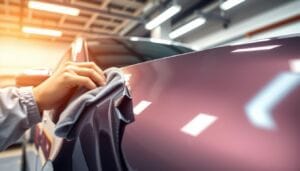
Car ceramic coating is a liquid polymer that bonds to your paint and leaves behind a thin, glassy layer that fights UV, chemicals, and water spotting better than wax. We install it at the shop because, in DFW heat and Wylie limestone dust, regular wax does not last. Ceramic does.
This guide explains what it actually is, what it does, what it does not do, and what you can expect to pay.
Table of Contents
ToggleThe chemistry in plain English
Most ceramic coatings are built on silicon dioxide (SiO2), the same family of compounds that makes glass. Some pro-tier products add titanium dioxide or graphene for extra hardness and heat resistance. The coating goes on as a liquid. The carrier evaporates. The SiO2 cross-links with the clear coat and cures into a hard, transparent film.
That film is hydrophobic, which is the part most people see first. Water beads up and rolls off instead of sheeting and sitting on the paint. Bird droppings and bug guts have a much harder time etching the clear coat because they cannot get as much surface contact.
What it actually protects against
Ceramic coatings are good at four things.
UV blocking. Texas sun is brutal. A coated panel oxidises slower than an uncoated one.
Chemical resistance. Acid rain, brake dust, road salt residue, tree sap. They all wash off easier and bite less when they sit.
Hydrophobicity. Water leaves quicker. Less water, less spotting, less mineral deposit when our hard water dries on the panel.
Light scratch protection. The coating is harder than your clear coat, so wash swirls and the kind of scuffs that come from a poorly maintained drive-through wash are reduced. Note the word reduced. Not eliminated.
What it does not do
We are direct about this one. A ceramic coating is not paint protection film. It will not stop a rock chip on the highway.
It will not fix existing swirl marks. It will not cover an orange-peel clear coat or hide rust. If you want real impact protection, that is a conversation about PPF, not coatings.
Pro install vs DIY spray bottle
There are two very different products being sold under the same name.
Pro-grade coatings are 9H-rated, two-year to multi-year products from brands like Gtechniq, CQuartz, and System X. They require paint correction first, then careful application in a controlled environment. We use these in the shop because they cure into a real layer of protection that lasts.
Consumer spray coatings from auto parts stores are mostly SiO2 boosters. They add some hydrophobic behaviour for a couple of months and then wear off. Useful as a top-up, not a substitute.
If you want something a DIY spray cannot give you, a pro install is the answer. If you just want easier washing for a season, the spray is fine.
What we charge
At our Wylie shop, ceramic coating runs $800 to $2,000 depending on the vehicle, the paint condition, and which tier of product you choose. A small sedan with paint in good shape lands at the lower end. A full-size truck or a daily driver that needs serious paint correction first lands higher. Get a real quote based on your vehicle and what you want to do.
What you have to do after
A ceramic coating is not maintenance free. To get the lifespan the product promises, you need to wash properly, ideally hand wash with pH-neutral soap and the two-bucket method. Skip drive-through washes with stiff brushes. Avoid harsh degreasers on the body. Top up with a maker-recommended booster spray every six to twelve months.
Done right, you keep that water-beading, easy-cleaning paint for years. Done wrong, you can dull the coating in months by attacking it with the wrong soap.
Is it worth it for your car
Our default recommendation for daily drivers in DFW is yes, especially if you park outside, drive in summer sun, and want the paint to look sharp without spending Sunday afternoons waxing. If you garage the car and only drive it on weekends, the value is more about appearance than protection, and that is a personal call.
If you want maximum protection against rock chips and road damage, pair a coating with a PPF front-end kit. The PPF takes the impact, the coating takes care of everything else.
*This article was drafted with the help of AI and reviewed by the Shell Shocked Wraps team.*
