

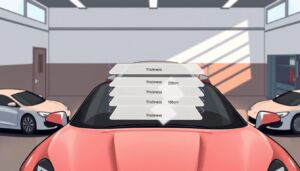
Paint protection film comes in different thicknesses, and the thickness changes how the film performs. Thicker film absorbs more impact and resists rock chips better. Thinner film conforms to tight curves more easily and is less visible at the edges. Picking the right one depends on what you are protecting and how the vehicle gets used.
Here is what you need to know before you spend on PPF.
Table of Contents
ToggleHow PPF thickness is measured
PPF thickness is measured in mils. One mil equals one one-thousandth of an inch. Most automotive paint protection films sit between 6 mil and 12 mil total thickness, including the urethane base layer, the adhesive, and the topcoat that handles self-healing.
Standard automotive PPF is around 8 mil. Heavy-duty PPF for high-impact zones runs 10 to 12 mil. Some specialty films built for off-road or commercial use go thicker than that.
The number you see on the spec sheet usually refers to the urethane core, not the total film stack. Ask which it is when you compare brands.
What thicker PPF gives you
Better impact resistance. A thicker urethane layer absorbs more energy from a flying rock or a piece of road debris before it reaches the paint underneath.
More forgiveness on edges and seams. Thicker film holds its shape and is more durable when it gets caught by a high-pressure wash or a brush at a drive-through.
Longer service life under heavy use. Off-road vehicles, work trucks, and cars that see a lot of highway miles benefit from the extra thickness because the film takes more wear before showing it.
What thicker PPF costs you
Conformability. Thicker film is harder to wrap around tight curves like the leading edge of a hood, recessed grilles, and complex headlight shapes. It can show seams or lift more easily on aggressive contours if not installed perfectly.
Visibility. Thicker film is slightly more visible at the edges where it terminates against bare paint. On a daily driver this is rarely noticeable, but on a show car it matters.
Cost. Thicker films cost more per square foot. A full vehicle PPF in a heavy-duty thickness costs more than the same install in a standard 8 mil film.
What thinner PPF gives you
Better conformability for complex shapes. The film stretches more cleanly around tight curves.
Cleaner edges. Less visible termination lines.
Lower cost per square foot.
Thinner film still self-heals minor scratches with heat and still resists most chemical and bug-related damage. It just gives up some impact resistance compared to a thicker option.
How thickness fits the use case
Front bumper, hood, fenders, and headlights on a daily driver in DFW. These see the most rock chips on the highway. We default to a standard or thicker PPF here. The impact zone is exactly where the extra mil pays for itself.
Door cups, door edges, and the area behind the rear wheel. High-wear, low-impact spots. Standard thickness is usually right.
Mirror caps, A-pillars, and roof leading edge. Tight curves where conformability matters more than max thickness. We pick a film that wraps cleanly here.
Rocker panels on trucks that see gravel roads or off-road use. Thicker film. The hits are constant.
What we install
We install XPEL Stealth and XPEL Ultimate Plus at the shop. Stealth is a satin-finish PPF that turns gloss paint into matte while protecting it. Ultimate Plus is a clear gloss PPF with self-healing topcoat.
We pick the thickness based on the panel and how the car gets used, not by defaulting to one option for every install. A garaged weekend car with a soft hood does not need the same film as a daily-driven truck on Texas highways. We make that call during the consultation.
Real cost ranges
Full front PPF on most vehicles runs $1,800 to $2,500 in our shop. This usually covers the front bumper, full hood, full fenders, mirrors, and headlights. The exact number depends on your vehicle, the film tier, and the thickness we recommend.
Full vehicle PPF runs $5,500 to $8,000. Big range, because a coupe and a full-size SUV are not the same job.
Get a real quote based on the vehicle and the panels you want covered. We will recommend the thickness for each zone instead of selling you the same film everywhere.
The simple version
Use thicker PPF where the impact happens. Use thinner PPF where conformability matters more than maximum protection. Do not buy one thickness across the whole car if the panels see different kinds of wear. The right install matches the film to the panel.
*This article was drafted with the help of AI and reviewed by the Shell Shocked Wraps team.*
