

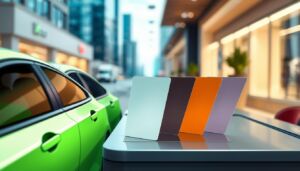
The right tint shade for a daily driver in Texas is usually 20 to 35 percent VLT on the rear glass and 35 percent on the front sides to stay legal. Anything darker is a personal call, but the law sets the floor.
We are Shell Shocked Wraps in Wylie, and we install ceramic and carbon film across the DFW north east. Picking a shade is the question that keeps people standing in the bay for half an hour, so this page is the version we wish we had to hand over.
Table of Contents
ToggleThe number that matters: VLT
VLT stands for visible light transmission. A film labelled 5 percent lets in 5 percent of visible light, which reads as nearly black from outside. A film labelled 50 percent lets in half the light, which looks like a faint factory tint. The lower the number, the darker the glass.
Three things you should know before you pick a number.
VLT is measured on the film and the glass combined. A 35 percent film on a window that already has 70 percent factory glass reads on a meter as around 24 percent. That is how legal installs end up failing roadside checks if the shop did not account for it.
VLT does not measure heat rejection. A dark film can have terrible heat performance, and a light film can have great heat performance. Shade and heat are two separate ratings.
Front side window VLT is regulated, the rear is not. Texas allows any darkness on the rear side and rear windows. The cap is on the front sides and the windshield strip.
Texas tint law as it actually reads
The Texas rules are short and worth knowing before you walk into a shop.
Most shops in DFW install front sides at 30 to 35 percent to keep a safety margin against the legal floor. We default to 35 percent on the front sides unless someone specifically asks to push closer to the floor and accepts the legality risk.
Shade as a daily driving decision
The choice between, say, 20 percent and 5 percent on the rear comes down to four things.
Visibility at night. Below 20 percent, backing out of a driveway after sunset gets harder. Below 10 percent, you are leaning on side mirrors and the reverse camera. If you drive late or park in dim lots, do not go darker than 20.
Heat in summer. Shade alone does not block heat. The film type, ceramic versus carbon versus dyed, does. Going from 35 percent carbon to 35 percent ceramic blocks far more infrared than going from 35 percent dyed to 5 percent dyed. If heat is the concern, change the film type before you change the shade.
Look from outside. Most people who walk in wanting 5 percent are after the murdered out look. It works on a black car, looks heavy on a white or silver car, and flattens the glass area on small sedans. We will tell you that on the lot before you buy.
Resale. Very dark tint reduces resale interest in a daily driver. If you plan to keep the car for ten years, do whatever you want. If you plan to flip it in two, stay closer to factory.
The film type changes everything
A 35 percent ceramic blocks more infrared heat than a 5 percent dyed. People are surprised by that, but it is the difference between a Llumar IRX style ceramic and a basic dyed film. We carry Llumar IRX and 3M Crystalline for ceramic, and Suntek for carbon. Carbon sits in the middle on heat, and dyed sits at the bottom.
Our default recommendation for a daily driver in DFW heat is ceramic at 35 percent on the front sides and 20 to 25 percent on the rear. That gets you legal margin, real heat rejection, and a clean look from outside.
What this costs
Real ranges. Final price depends on the vehicle and how the rear glass is shaped.
We will quote your specific car after a quick phone call.
Cure time matters more than people think
A fresh tint job needs 3 to 5 days with the windows up before you roll them down. Texas summer heat speeds the cure up, but rolling early can pull a film and leave a permanent ripple. We tell every car that leaves the bay to leave the windows alone for the rest of the week, and that small water haze you might see is normal.
Service area
We tint cars in Wylie, Plano, Frisco, Allen, Garland, Rockwall, Murphy, Sachse, and Lavon. Call or stop by, tell us what vehicle you have and how dark you are thinking, and we will tell you straight whether the shade you want is the right one.
This article was drafted with the help of AI and reviewed by the Shell Shocked Wraps team.
