

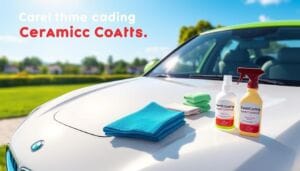
A ceramic coating is not a “set it and forget it” upgrade. It is a hard sacrificial layer that needs basic maintenance to keep performing the way it did the day we handed the keys back. Done right, you stretch the coating life from the bottom of the warranty range to the top.
Here is what we tell every customer who picks up a freshly coated vehicle.
Table of Contents
ToggleThe first 7 days are the most important
A fresh ceramic coating is fully cured at the molecular level by the time you drive away, but the surface is at its most vulnerable for about a week. We coat with Gtechniq, CQuartz, and System X depending on the package, and all three need the same first-week treatment.
Do not wash the vehicle for at least 7 days. Do not park under trees that drop sap or pollen. Do not let bird droppings sit on the surface for more than a few hours. The first week is when the coating bonds tightest to the clear coat. Anything that reacts with that surface in week one can leave a permanent mark.
How to wash a ceramic-coated car
Two-bucket method, pH-neutral soap, microfiber wash mitt. That is the entire recipe.
The two-bucket method means one bucket has soap and water, one bucket has rinse water. After every panel you rinse the dirt out of the mitt in the rinse bucket before going back to the soap bucket. This keeps the dirt off the mitt and stops you from grinding it across the next panel.
pH-neutral soap is the only kind to use on a coating. Most “wash and wax” or “high foam degreaser” products are alkaline and will eat into the coating’s surface energy over time. Look for soaps specifically labelled ceramic-safe or pH-neutral.
Skip automatic tunnel washes. The strip-curtain ones with rotating brushes are the worst offenders. They drag debris across the coating and put micro-marring back into a surface we just spent hours preparing. Touchless wash bays are a fair compromise if hand washing is not an option.
Drying matters more than people think
After washing, dry the car. Do not air dry. Water spots are mineral deposits left behind when water evaporates, and minerals are exactly the kind of contaminant a coating cannot block.
A clean microfiber drying towel or a leaf blower works. We prefer a leaf blower for body panels because there is no contact at all. A drying towel is fine for the door jambs and hard-to-reach spots.
If you are washing in direct DFW sun in summer, water dries on the panel before you can towel it off. Wash early morning or in the shade.
Maintenance products that help
A ceramic coating is the base layer. There are a few products designed to top it up between washes that genuinely add to the look and the bead.
Spray sealants and toppers. Most coating brands sell their own spray topper. After the wash, while the panel is still wet, you spray the topper on and rinse it off. It refreshes the hydrophobic behaviour and adds a bit of slickness back.
Detail sprays. For light dust between washes, a quality detail spray on a clean microfiber wipes off bugs, dust, and pollen without putting marring into the surface.
Iron removers and decontamination sprays. Once or twice a year on a coated car, an iron remover lifts brake dust and metallic contamination that has bonded to the surface even with a coating in place.
What kills coatings
Three things shorten coating life faster than anything else.
Bird droppings left on the panel in summer heat. The acidity in droppings reacts fast in 100 degree DFW summer sun. A dropping that sits for a full day in July can etch through the coating into the clear coat. Wipe them off the same day.
Bug splatter, same reason. Bugs are acidic and the heat from a hot panel accelerates the reaction. Get bug splatter off within a day or two.
Improper wash technique. The coating is hard but it is not scratch-proof. A dirty mitt, a tunnel wash, or a non-microfiber towel will dull the gloss and reduce the beading over time.
When to top up
Different coating tiers have different lifespans. We install Gtechniq, CQuartz, and System X across multiple package levels. The base packages are 1 to 3 year coatings. Mid tiers are 3 to 5 years. Top tiers are 5 to 7 plus.
You will know it is time to top up when the water stops beading the way it used to. A fresh coating sheets water off in tight beads that roll right off the panel. As the coating ages, the beads get bigger and slower to release. When water starts sheeting flat instead of beading, the coating is past its prime.
We can apply a maintenance coat to bring an aging coating back close to fresh, or do a full strip and re-coat depending on age and condition.
What about waxes and sealants on top
Most coatings do not need wax on top. Wax sits on the surface, the coating is the surface, and adding wax over a coating gives you the look of a freshly waxed car for a few weeks before the wax wears off.
If you like the act of waxing, a coating-safe spray sealant after a wash gets you the same satisfaction without the mess. We do not recommend traditional paste waxes on a coated vehicle because the application process risks scratching the coating.
Our default care routine
For a coated daily driver in DFW, here is what we tell people.
That is it. The coating handles the heavy lifting on UV, water spots, and minor contamination. Your job is to keep the surface clean so the coating can do its work.
Call us if the beading is fading or you have a question about a specific product. We would rather tell you what to use than fix damage from the wrong cleaner.
*This article was drafted with the help of AI and reviewed by the Shell Shocked Wraps team.*
