

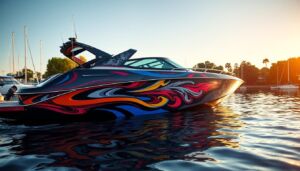
A marine vinyl wrap is a printed or coloured vinyl film, engineered for water and UV exposure, that gets installed over your boat’s hull, deck, or topsides. It changes the look completely and adds a sacrificial layer between the gelcoat and the sun. We install marine wraps at the shop in Wylie for the same reason we install vehicle wraps: it is faster, more reversible, and often cheaper than a full repaint.
If you are weighing a wrap against paint or trying to figure out what to ask for, here is what actually matters.
Table of Contents
ToggleWhy people are wrapping boats instead of repainting
Repainting a boat is a serious project. Strip, sand, prime, base, clear, polish. Days of work, expensive materials, and the gelcoat underneath gets cut into in the process. Once it is done, it is permanent.
A wrap goes on over a clean gelcoat surface. It uses cast vinyl rated for marine use, which is more flexible than a standard auto-grade film and built to handle constant water contact and UV without lifting at the seams.
When you want a change, the vinyl comes off and the original gelcoat is still there. That alone is the reason most boat owners pick a wrap. You are not committing the hull to one colour for the rest of its life.
What marine vinyl actually is
Marine wrap film is cast vinyl, usually 2 to 4 mil thick, with a pressure-sensitive adhesive that holds in wet conditions and releases cleanly when you remove it later.
We use the same brands you see on premium vehicle wraps. 3M 2080 and Avery SW900 are both rated for marine use. They come in matte, gloss, satin, metallic, and colour-shift finishes. Custom prints are also possible if you want a graphic design, livery, or sponsor wrap.
The film resists saltwater, fresh water, fuel splash, and UV. It does not resist getting cut by the trailer or scuffed by a dock fender. Treat the wrapped surface like paint and you get years out of it.
What can be wrapped on a boat
Pretty much anything with a smooth, sealed surface.
Hull sides above the waterline. Topsides. Console exteriors.
T-tops. Outboard cowlings. Trailer fenders.
Personal watercraft (jet skis, wave runners) get wrapped all the time, often with custom prints because the surfaces are smaller and a wild design works.
What does not get wrapped: anything below the waterline that sits in water continuously. Antifouling and bottom paint live there for a reason. Wraps live above the waterline.
Full wrap, partial wrap, or graphics
A full wrap covers every visible surface above the waterline. This is the option if you want a complete colour change.
A partial wrap covers specific panels: hull stripes, the console, the engine cowlings, the swim platform. Cheaper, faster, and often the smarter choice if your gelcoat colour is fine and you just want a fresh accent or branding.
Graphics and lettering are the lightest option. Boat name, registration numbers, sponsor logos, custom striping. We cut these from the same vinyl families and apply them as a separate job.
What it costs
Boats are quoted by surface area and complexity, not by length alone. A small bay boat with a partial wrap is a different conversation than a 30-foot cruiser with a full hull and superstructure wrap.
Commercial wrap pricing in our shop runs $1,800 to $5,000 depending on coverage and design, and small watercraft and personal jet ski wraps usually fall inside that range. Larger boats run higher. Get a real quote with photos and dimensions, because wrapping a curved hull with a swim platform and rod holders is not the same labour as wrapping flat panels.
Surface prep is everything
This part separates wraps that last from wraps that lift in a season. The hull needs to be cleaned down to bare gelcoat, with all wax, polish, oxidation, and silicone protectants removed. Old graphics need to come off completely, including adhesive residue. Any chips, gouges, or surface damage need to be repaired first because vinyl follows the surface underneath. It does not hide it.
We do this prep in-house before the wrap goes on, because we want the install to last. A wrap installed over a contaminated or oxidised hull will not stick the way it should and will start lifting at the edges within months.
Care and maintenance
Wash with mild soap and a soft mitt. No abrasive pads, no harsh degreasers, no pressure washing at close range on the seams. Rinse off salt as soon as you can after a saltwater run. Store with a cover or, if it sits in the sun, accept that any vinyl is going to age faster outside than under cover.
A well-installed marine wrap on a boat that gets reasonable care holds up well in DFW and on Texas lakes. When you are ready for a change, peel it off, clean the gelcoat, start over.
Is a wrap right for your boat
If your gelcoat is in decent shape and you want a colour change, branding, or fresh accents without committing to paint, wrap it. If your gelcoat is heavily damaged, oxidised past repair, or you are doing a full restoration, a wrap is a band-aid and paint is the real answer.
For everyone in between, which is most boat owners, a wrap is the lower-cost, lower-commitment, faster route to the look you want.
*This article was drafted with the help of AI and reviewed by the Shell Shocked Wraps team.*
